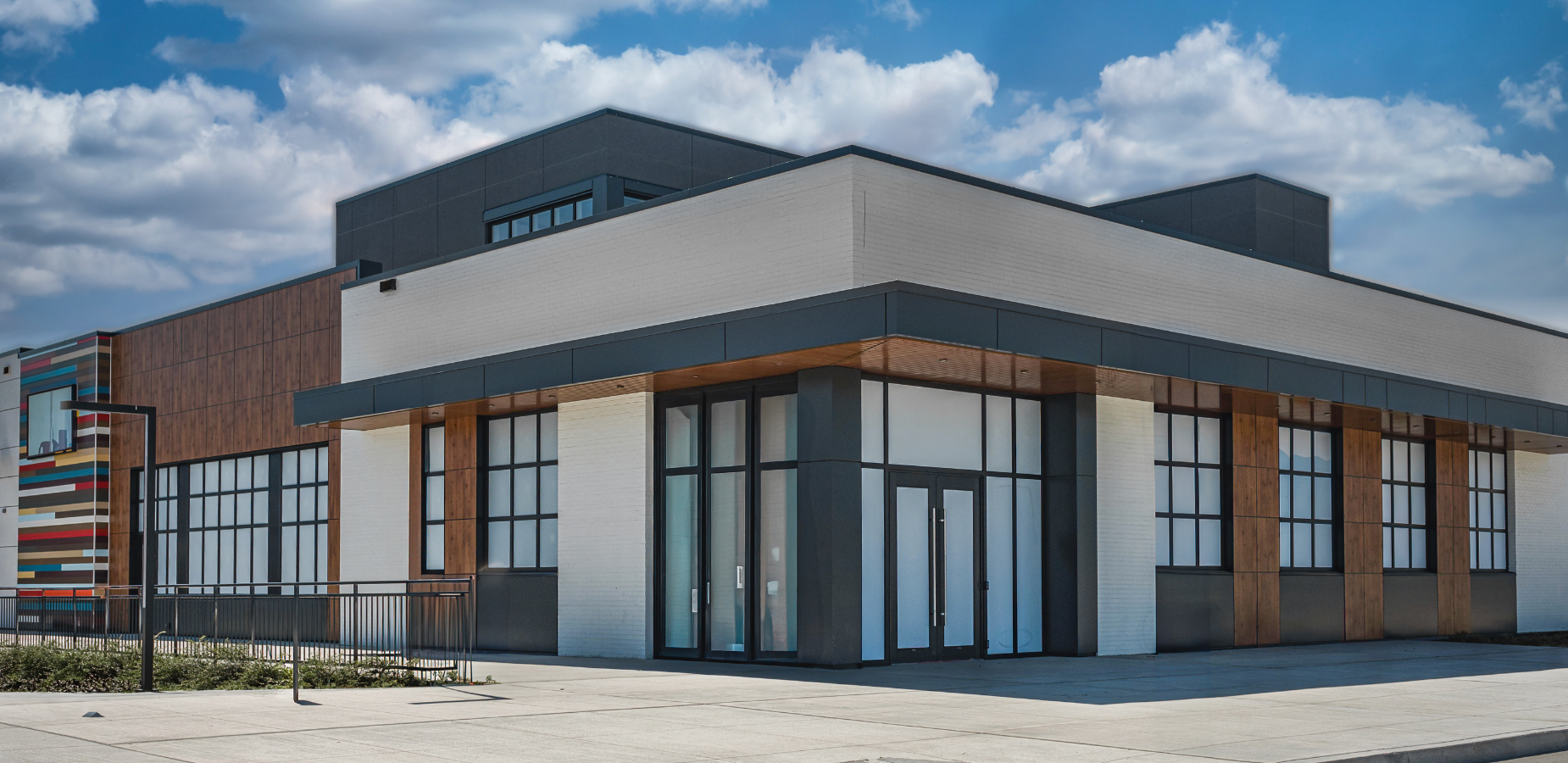
Austin’s commercial sector has seen rapid growth in the last few years. With a strong economy and commercial sector, it’s no wonder that it has seen a surge of new developments across various industries.
From modern office spaces and retail storefronts to hospitality venues and healthcare facilities, we’re seeing plenty of commercial construction in Austin. However, as demand rises, so does the complexity of planning and executing successful projects. Choosing the right construction approach can impact cost control, project timelines, and overall results.
Two delivery methods are most commonly used: design-build and traditional construction delivery (often called design-bid-build). Each approach shapes how efficiently projects move from concept to completion. The right choice can help ensure your project meets every goal.
Commercial construction refers to the entire process of creating commercial properties, including planning, design, and construction. These projects typically involve collaboration between developers, architects, engineers, and contractors.
Common examples of commercial construction can include:
Austin is a fast-growing market. Dubbed the best city to start a business in 2025 and one of the fastest-growing cities for small businesses, commercial projects involve adaptive reuse, redevelopment, and interior build-outs that can support evolving business needs. Many developers rely on experienced commercial build out contractors to transform shell spaces into fully functional environments.
Construction delivery methods define how the design and construction phases of a project are organized and managed. They determine who is responsible for each stage, how collaboration happens, and how risks are distributed among project participants.
Two of the most widely used methods in commercial construction in Austin are design-build and traditional construction delivery.
This is a streamlined approach in which a single team handles both the design and construction of a project. Instead of hiring an architect and a contractor separately, the client works with a single entity that is responsible for the entire process.
In a design-build structure, the construction company collaborates with architects, engineers, and designers from the earliest planning stages. This integrated approach creates a single point of accountability and encourages collaboration from the start.
Key characteristics of design-build include:
For developers and property owners, working with experienced commercial build out contractors in a design-build environment leads to more efficient decision-making and fewer unexpected delays.
The traditional construction method separates the design and construction phases into distinct steps. In this model:
This method has been widely used for decades and remains common in many large projects. Some advantages of traditional construction include:
However, because design and construction teams operate separately, communication gaps can sometimes arise. If issues emerge during construction – such as budget constraints or unforeseen site conditions – changes may require redesigns, revisions, and additional coordination. In complex projects, these delays can affect a project’s schedule and budget.
While both approaches can produce successful results, the way teams collaborate and manage the project differs significantly. This can impact the timeline, costs, and overall project outcomes.
| Design-Build | Traditional | |
| Collaboration |
Collaboration begins early, with architects, engineers, and builders working together during planning and design. |
The design team and contractor typically work independently until construction begins. |
| Timeline | Construction can begin while design details are still being finalized, allowing phases to overlap and reducing overall project duration. |
Construction begins only after the design phase is fully completed and bidding is finished. |
| Budget Control | Budget considerations are integrated into the design process from the start, helping teams align design decisions with financial goals. |
Budget adjustments may occur after bids are received, which can lead to redesigns if costs exceed expectations. |
| Risk Management | One team holds responsibility for both design and construction, reducing the potential for disputes between parties. |
Responsibility is divided between architects and contractors, which can sometimes complicate problem resolution. |
For developers seeking efficiency and streamlined coordination, the design-build approach has become increasingly popular in commercial construction projects.
Austin’s dynamic commercial development industry favors efficient construction approaches. Many modern projects benefit from design-build delivery because it enables teams to:
Architects and builders collaborate from the earliest stages of planning and remain involved as designs are built. In case changes are needed because of site conditions or shifts in business requirements, they can adapt design elements quickly.
This flexibility ensures commercial projects continue to meet owners’ operational requirements without restarting the process.
Construction professionals are involved during the design phase rather than after plans are finalized. Their early input helps identify potential structural, budgetary, or logistical challenges before construction begins.
This can help avoid costly delays, as potential construction issues can be spotted during planning rather than when construction is already underway. It can also minimize disruptions and keep projects on track.
Because design and construction teams work together from the start, project costs and scheduling considerations are integrated directly into the design process.
This alignment helps ensure that design decisions remain realistic and achievable within the project’s financial framework.
Clear communication is one of the most important factors in successful commercial construction projects. Design-build approaches bring architects, engineers, contractors, and owners together under a unified project structure. Instead of managing separate contracts and communication channels, stakeholders collaborate through a single coordinated team.
That said, traditional delivery methods may still work well for certain projects, particularly those that require highly detailed design documentation before construction begins. Ultimately, the best approach depends on various factors that can affect the experience of the project team.
Regardless of the delivery method you choose, selecting the right construction partner is crucial to project success. Here’s why our clients have trusted Freecia Group for their commercial projects:
Freccia has spent the past decade helping bring commercial projects across Austin to life. Our precise craftsmanship built for businesses means projects are completed on schedule, on budget, and on point. As we celebrate our 10th anniversary, we continue to build on a reputation for reliability and thoughtful construction.
Freccia is locally owned and deeply connected to the Austin community. Being based in the region means our team understands the city’s permitting processes, development landscape, and architectural character.
Freccia operates as a design-build construction company, which means we collaborate with clients from the earliest planning stages. Rather than waiting until plans are finalized, we help guide projects from concept through completion. This proactive approach helps streamline coordination, reducing delays and ensuring projects move forward efficiently.
From early feasibility discussions to final walkthroughs, Freccia provides comprehensive project management that supports clients at every stage.
Our management includes:
By guiding clients through each phase, we help simplify the process for property owners navigating complex builds.
Freccia is known for delivering projects with exceptional attention to detail and durable construction standards. Whether developing a retail space, office environment, or hospitality concept, the team prioritizes long-term quality and thoughtful design.
Starting a new project often involves complex financial planning. Freccia offers financing options that help developers and property owners move forward with construction while maintaining flexibility in capital planning.
As demand for new commercial spaces in Austin increases, choosing the right construction process can influence every aspect of a project. No matter which path you choose, working with an experienced team is essential to ensuring successful commercial general contracting outcomes.
If you’re planning a project and exploring options for your commercial project, Freccia Group is ready to help you move forward. Discuss your vision with us or contact us for more information. We can help your next commercial project move from concept to completion with lasting value.